Viktor Schmidt · 20 October 2026
Regional Disparities in Skill Development Drive Targeted Funding Shifts Across Polish Districts
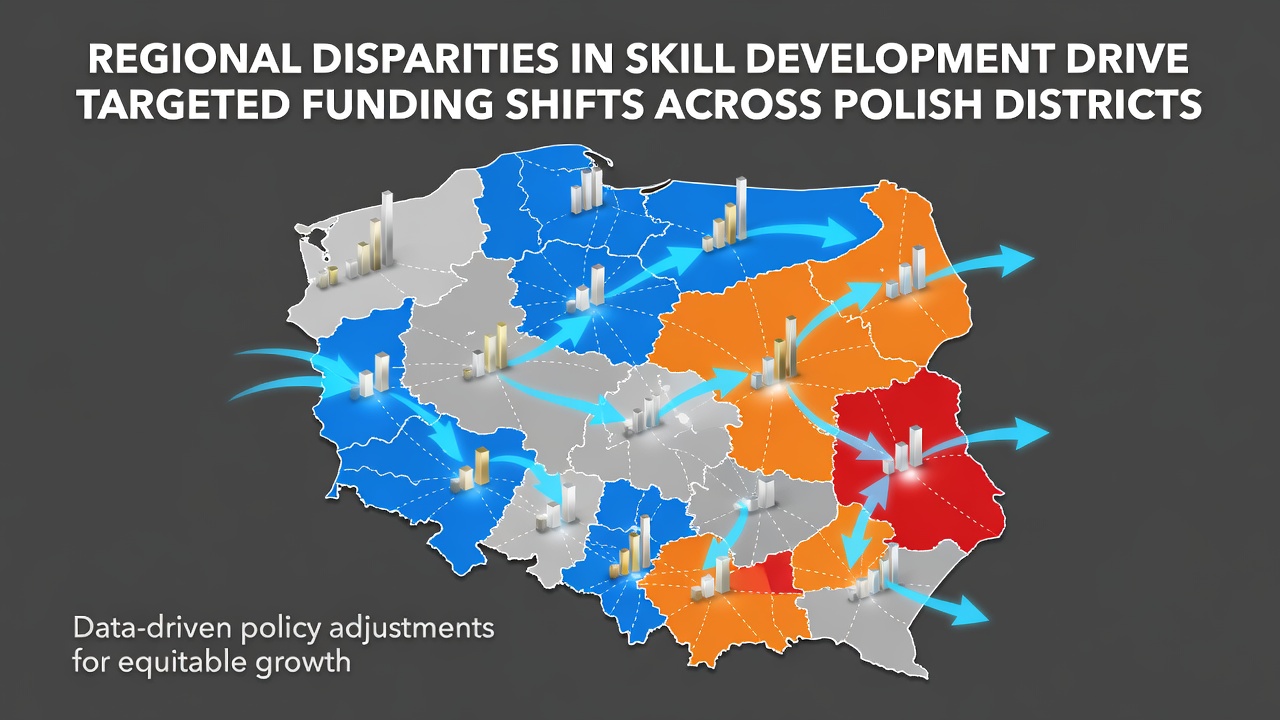
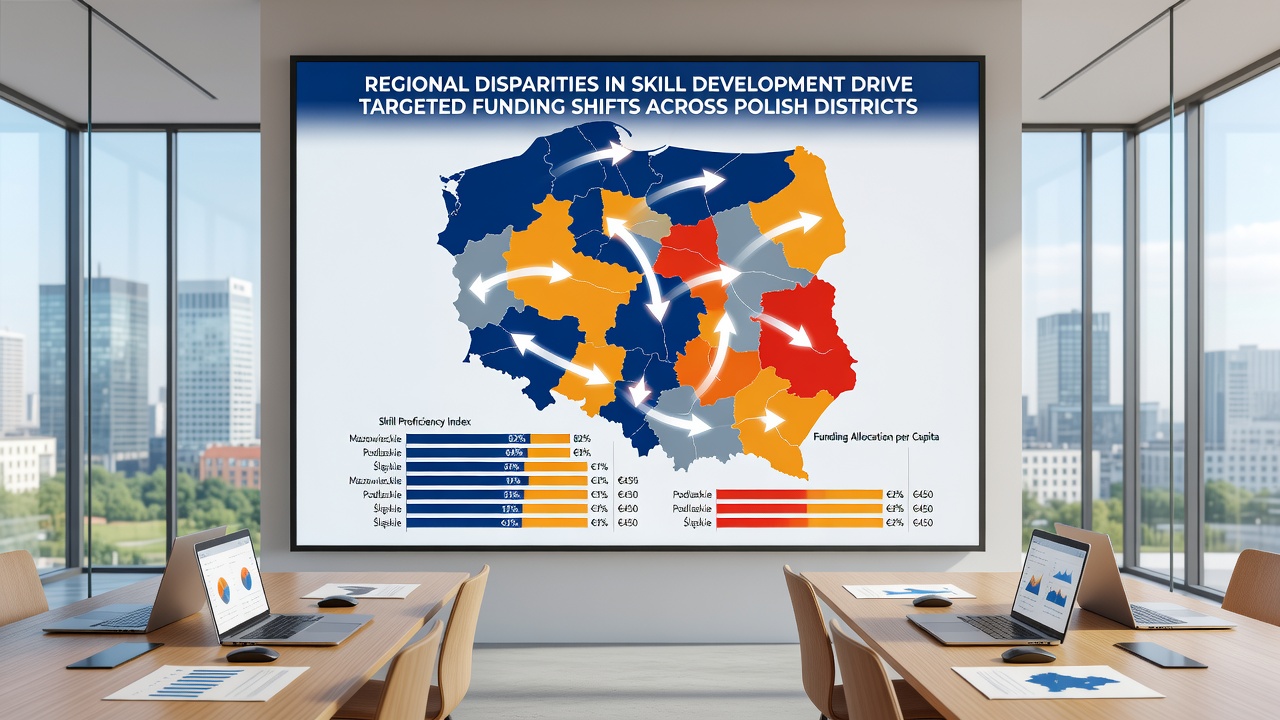
Regional differences in skill development programs have prompted Polish authorities to redirect resources toward underperforming districts, with adjustments taking effect as early as October 2026 according to education ministry records, and data from the European Commission shows how these changes align with broader EU regional development priorities while addressing gaps between urban centers like Warsaw and rural voivodeships in the east and south.
Observers note that districts in Podlaskie and Lubelskie report lower enrollment in vocational training compared to Mazowieckie, where access to industry partnerships has supported higher completion rates, and this pattern has led administrators to revise allocation formulas so that funding follows measurable competency outcomes rather than historical baselines.
Patterns Across Districts
Statistics from the Polish Ministry of Education indicate that urban districts maintain higher participation in digital and technical skills courses, whereas rural areas face shortages in qualified instructors and updated facilities, which creates a cycle where students in those regions show reduced persistence into advanced programs, and researchers at various Polish universities have documented how these imbalances influence labor market entry for graduates.
Funding mechanisms now incorporate performance indicators that track early competency gains, allowing districts with demonstrated progress to retain baseline support while directing supplemental grants to areas showing slower advancement, and this approach draws on models tested in pilot regions during 2025.
Drivers of the Shifts
Analysts point to several factors behind the disparities, including uneven distribution of EU pilot resources that previously favored districts with established educational infrastructure, and the result has been a recalibration where targeted funding now prioritizes regions with the largest gaps in foundational skills such as numeracy and problem-solving.
Data collected through unified tracking systems reveal that districts implementing competency mapping tools achieve faster alignment between school curricula and local employer needs, which in turn supports applications for additional resources, and one study from an international academic source highlighted how similar adjustments in other countries produced measurable improvements in regional equity.
Implementation Details
By October 2026 the ministry plans to release updated district-level reports that will guide the next round of allocations, and these documents build on evidence gathered from schools that adopted early skill programs, showing correlations between program intensity and student retention rates across different regions.
Administrators in lower-performing districts have begun collaborating with national agencies to redesign training modules, incorporating feedback from local industries that require specific technical competencies, and this process has accelerated since the introduction of new reporting requirements that tie funding directly to outcome metrics.
External partners, including organizations focused on workforce development, contribute data that helps refine these strategies, and comparisons with approaches used in Canada and Australia demonstrate how targeted reallocations can narrow regional gaps when supported by consistent monitoring.
Observed Outcomes
Initial results from districts that received adjusted funding show increased enrollment in specialized courses, particularly those addressing high-demand sectors such as manufacturing and information technology, and figures released by government bodies indicate that participation rates have risen by double-digit percentages in several eastern voivodeships since the policy changes began.
Yet the transition has required schools to update assessment methods and teacher training protocols, which has placed additional demands on staff in smaller districts, and ongoing evaluations will determine whether these investments produce sustained improvements in skill acquisition.
Conclusion
The ongoing adjustments to funding distribution reflect a data-driven response to persistent regional imbalances in skill development across Polish districts, and continued monitoring through established tracking systems will provide further insights into how these shifts affect student outcomes and labor market readiness in the coming years.