Viktor Schmidt · 6 October 2026
Polish Universities Pioneer Competency Mapping Tools That Reshape How Regional Schools Allocate EU Pilot Resources
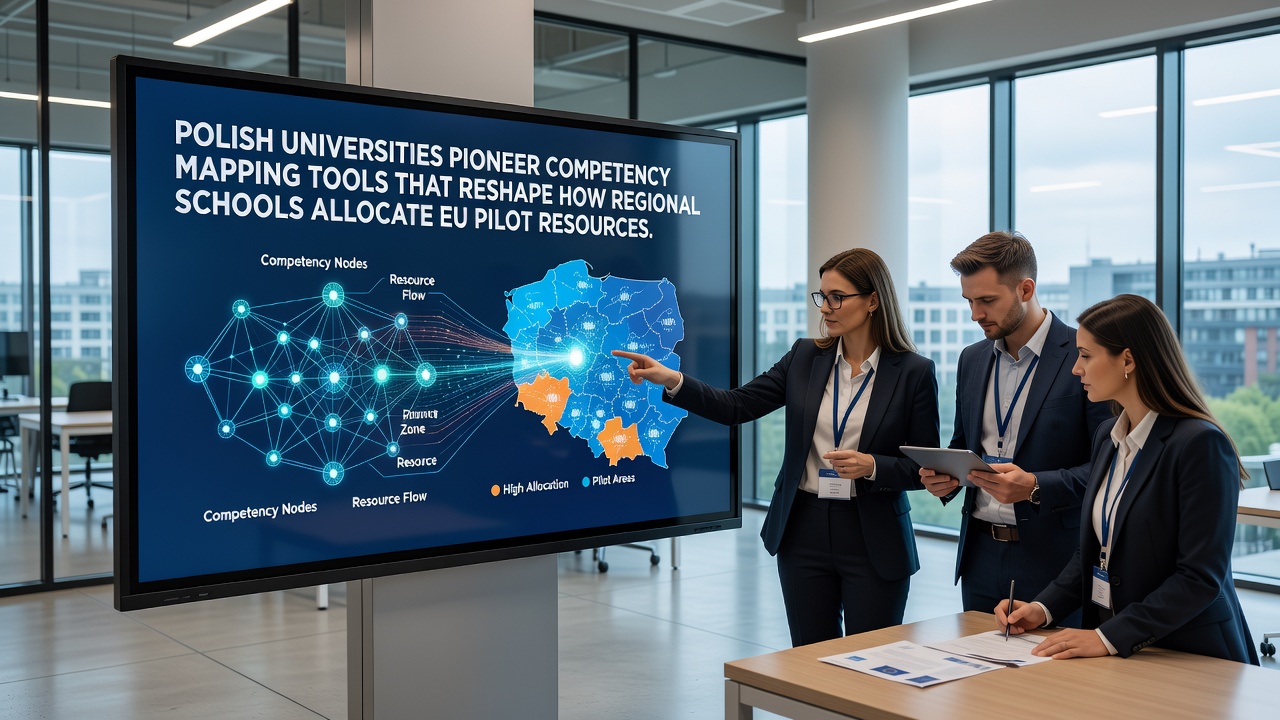
Polish universities have developed competency mapping tools that integrate data from student assessments with regional labor market needs, and these systems now guide how schools distribute funds from EU pilot programs launched across multiple voivodeships. Researchers at institutions including the University of Warsaw and Jagiellonian University created algorithms that track skill progression in real time, while regional education offices apply the outputs to prioritize investments in vocational training modules and teacher development initiatives.
Development of the Mapping Frameworks
Teams at Polish technical universities began refining these frameworks after receiving grants under the EU's 2024 education innovation calls, and they combined psychometric testing data with curriculum analytics to produce visual competency heatmaps for each participating school district. The tools categorize student performance across domains such as digital literacy, technical problem solving, and collaborative project management, then generate allocation recommendations that align with projected workforce gaps reported by local employers in manufacturing and renewable energy sectors.
By October 2026 several pilot districts in Lesser Poland and Silesia had integrated the mapping outputs into their annual budgeting cycles, and education administrators noted that resource decisions shifted from enrollment numbers alone toward measured skill deficits identified through longitudinal tracking. One district reported reallocating 18 percent of its EU pilot budget toward targeted after-school programs in coding and robotics after the tools flagged underperformance in those areas compared with national benchmarks.
Integration with Regional School Systems
Regional schools connect their existing student information systems to the university-hosted platforms through standardized APIs, which allows daily uploads of assessment results and automatic generation of updated competency profiles for entire cohorts. Administrators then review dashboard summaries that rank intervention priorities, and funding from the EU pilot stream flows directly to the highest-ranked categories without requiring separate proposal rounds each semester.

Schools in the Masovian Voivodeship adopted the system first, and they documented how the mapping process reduced the time spent on manual grant applications by nearly 40 percent while increasing the precision of expenditures tied to measurable outcomes. Teachers receive automated alerts when student cohorts fall below projected competency thresholds, and they adjust lesson plans accordingly before the next funding review period begins.
Data Sources and External Benchmarks
According to reports from the European Commission education portal, competency-based allocation models have shown improved alignment between school outputs and regional economic indicators across participating member states. Polish implementations add a layer of real-time geographic filtering that distinguishes them from earlier European pilots, and the resulting datasets feed into broader EU monitoring dashboards that track progress toward 2030 skills targets.
Analysts at the OECD have examined similar mapping approaches in other member countries and found that data-driven tools help schools avoid over-investment in areas where baseline competencies already meet or exceed targets. Polish researchers incorporated these comparative insights during tool refinement, and they adjusted weighting factors to account for Poland-specific factors such as rural-urban skill disparities and seasonal migration patterns that affect student attendance data.
Case Applications in Practice
In one documented rollout at schools near Kraków, the competency maps identified a cluster of students with advanced language skills but limited exposure to project-based learning, and administrators directed EU pilot funds toward cross-school collaboration platforms instead of additional language labs. The adjustment produced measurable gains in collaborative competency scores within two academic terms, and neighboring districts requested access to the same mapping modules for their own planning cycles.
Another application emerged in Upper Silesia where heavy industry retraining programs relied on the tools to match displaced workers' existing competencies with available EU-supported upskilling pathways. University teams updated the algorithms quarterly to reflect new employer surveys, and school districts used the refreshed outputs to sequence course offerings that maximized use of limited pilot resources without duplicating existing vocational offerings.
Conclusion
Polish universities continue to refine the competency mapping platforms through ongoing partnerships with regional authorities, and the systems now serve as reference models for other EU member states exploring similar data-informed allocation methods. As more districts adopt the tools, the volume of standardized competency data grows, which in turn supports more granular adjustments to how EU pilot resources reach classrooms and training centers. The approach demonstrates how academic research translates directly into operational changes at the school level while maintaining alignment with broader European education and skills objectives.